1092 search results - page 93 / 219 » Polynomial Interpretations and the Complexity of Algorithms |
163
click to vote
ISVLSI
2002
IEEE
15 years 11 months ago
2002
IEEE
Retiming has been shown to be a powerful technique for improving the performance of synchronous circuits. However, even though retiming algorithms of polynomial time complexity ha...
292
click to vote
Book
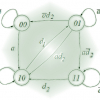
"From an applications viewpoint, the main reason to study the subject of these notes is to help deal with the complexity of describing random, time-varying functions. A random...
168
click to vote
PAKDD
2001
ACM
15 years 10 months ago
2001
ACM

The alternating decision tree brings comprehensibility to the performance enhancing capabilities of boosting. A single interpretable tree is induced wherein knowledge is distribute...
160
click to vote
EMMCVPR
2001
Springer
15 years 10 months ago
2001
Springer
After [15, 31, 19, 8, 25, 5] minimum cut/maximum flow algorithms on graphs emerged as an increasingly useful tool for exact or approximate energy minimization in low-level vision...
167
click to vote
ALT
2004
Springer
16 years 3 months ago
2004
Springer
A revision algorithm is a learning algorithm that identifies the target concept, starting from an initial concept. Such an algorithm is considered efficient if its complexity (in ...