192
Voted
ICCV
2007
IEEE
16 years 8 months ago
2007
IEEE

We introduce the Tsallis divergence error measure in the context of pLSA matrix and tensor decompositions showing much improved performance in the presence of noise. The focus of ...
193
click to vote
ICCV
2007
IEEE
16 years 8 months ago
2007
IEEE
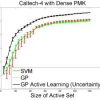
Discriminative methods for visual object category recognition are typically non-probabilistic, predicting class labels but not directly providing an estimate of uncertainty. Gauss...
161
Voted
ICCV
2007
IEEE
16 years 8 months ago
2007
IEEE
Recent approaches to action classification in videos have used sparse spatio-temporal words encoding local appearance around interesting movements. Most of these approaches use a ...
193
click to vote
ICCV
2007
IEEE
16 years 8 months ago
2007
IEEE
In contrast to traditional Markov random field (MRF) models, we develop a Steerable Random Field (SRF) in which the field potentials are defined in terms of filter responses that ...
189
click to vote
ICCV
2007
IEEE
16 years 8 months ago
2007
IEEE
Many recognition algorithms depend on careful positioning of an object into a canonical pose, so the position of features relative to a fixed coordinate system can be examined. Cu...
141
click to vote
ICCV
2007
IEEE
16 years 8 months ago
2007
IEEE
We introduce a novel topological formulation for contour grouping. Our grouping criterion, called untangling cycles, exploits the inherent topological 1D structure of salient cont...
167
click to vote
ICCV
2007
IEEE
16 years 8 months ago
2007
IEEE
In this paper, we propose a novel approach for scene modeling. The proposed method is able to automatically discover the intermediate semantic concepts. We utilize Maximization of...
197
click to vote
ICCV
2007
IEEE
16 years 8 months ago
2007
IEEE
We present a novel method to reconstruct the 3D shape of a scene from several calibrated images. Our motivation is that most existing multi-view stereovision approaches require so...
171
click to vote
ICCV
2007
IEEE
16 years 8 months ago
2007
IEEE
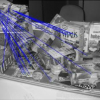
We extend the successful 2D robust feature concept into the third dimension in that we produce a descriptor for a reconstructed 3D surface region. The descriptor is perspectively ...