2070 search results - page 34 / 414 » A Reduced-Basis Element Method |
140
Voted
BMCBI
2007
15 years 3 months ago
2007

Background: The precision of transcriptional regulation is made possible by the specificity of physical interactions between transcription factors and their cognate binding sites ...
126
Voted
TOMS
2010
15 years 2 months ago
2010
s the mathematical abstractions and methods used in the design of the library and its implementation. A number of examples are presented to demonstrate the use of the library in ap...
128
Voted
CGF
2008
15 years 3 months ago
2008

Finite element simulations in computer graphics are typically based on tetrahedral or hexahedral elements, which enables simple and efficient implementations, but in turn requires...
122
Voted
DAGSTUHL
2010
15 years 5 months ago
2010
We present a method for hierarchical data approximation using curved quadratic simplicial elements for domain decomposition. Scientific data defined over two- or three-dimensional ...
153
Voted
Publication
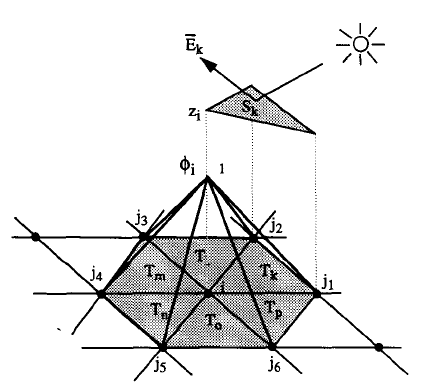
We propose to combine a triangular element surface model with a linearized reflectance map to formulate the shape-from-shading problem. The main idea is to approximate a smooth sur...