133 search results - page 13 / 27 » A SAT-Based Approach to Multiple Sequence Alignment |
206
click to vote
GCB
2004
Springer
16 years 13 days ago
2004
Springer

: We introduce the novel concept of graph alignment, a generalization of graph isomorphism that is motivated by the commonly used multiple sequence alignments. Graph alignments and...
170
click to vote
ISMIR
2005
Springer
16 years 17 days ago
2005
Springer
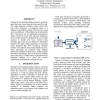
Finding the best matching database target to a melodic query has been of great interest in the music IR world. The string alignment paradigm works well for this task when comparin...
194
click to vote
BMCBI
2004
15 years 7 months ago
2004
Background: The prediction of ancestral protein sequences from multiple sequence alignments is useful for many bioinformatics analyses. Predicting ancestral sequences is not a sim...
222
click to vote
BMCBI
2010
15 years 7 months ago
2010
Background: While multiple alignment is the first step of usual classification schemes for biological sequences, alignment-free methods are being increasingly used as alternatives...
252
click to vote
BMCBI
2011
14 years 10 months ago
2011
Background: The Smith-Waterman algorithm for local sequence alignment is more sensitive than heuristic methods for database searching, but also more time-consuming. The fastest ap...