996 search results - page 56 / 200 » Computers Assist Humans in Human Resources |
PRIMA
2004
Springer
15 years 5 months ago
2004
Springer

— Distributed computing systems are increasingly being created as self-organizing collections of many autonomous (human or software) agents cooperating as peers. Peer-to-peer coo...
111
click to vote
HPDC
1998
IEEE
15 years 4 months ago
1998
IEEE
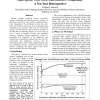
Modern scientific computing involves organizing, moving, visualizing, and analyzing massive amounts of data from around the world, as well as employing largescale computation. The...
IROS
2006
IEEE
15 years 5 months ago
2006
IEEE
— Robots that can interact naturally with humans require the integration and coordination of many different components with heavy computational demands. We argue that an architec...
CHI
2007
ACM
16 years 7 days ago
2007
ACM
We conducted two studies that demonstrate automatically generated interfaces can be more usable than interfaces created by human designers. The first study shows that users of aut...
110
click to vote
ACHI
2008
IEEE
15 years 6 months ago
2008
IEEE
—In the framework of the European Integrated Project PALETTE, the École Polytechnique Fédérale de Lausanne (EPFL) is developing the eLogbook Web 2.0 social software. The purpo...