4111 search results - page 174 / 823 » Designing the Human Computer Interaction: Trends and Challen... |
230
Voted
HRI
2011
ACM
14 years 5 months ago
2011
ACM
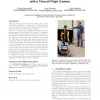
Pointing gestures are a common and intuitive way to draw somebody’s attention to a certain object. While humans can easily interpret robot gestures, the perception of human beha...
110
click to vote
EWHCI
1993
15 years 5 months ago
1993

One of the new design goals in Human Computer Interaction is to extend the sensory-motor capabilities of computer systems to better match the natural communication means of human b...
139
Voted
IJMMS
2007
15 years 1 months ago
2007
How we design and evaluate for emotions depends crucially on what we take emotions to be. In affective computing, affect is often taken to be another kind of information - discret...
85
Voted
HICSS
1999
IEEE
15 years 6 months ago
1999
IEEE
Scenarios of human-computer interaction help us to understand and to create computer systems and applications as artifacts of human activity
96
Voted
AI
2006
Springer
15 years 1 months ago
2006
Springer
The AI and HCI communities have often been characterized as having opposing views of how humans and computers should interact. As both of them evolve, there is a deeper contrast t...