5075 search results - page 43 / 1015 » Interaction Design for the Disappearing Computer |
178
click to vote
CA
1999
IEEE
15 years 10 months ago
1999
IEEE

This paper presents a simple and efficient method of modeling synthetic vision, memory, and learning for autonomous animated characters in real-time virtual environments. The mode...
159
click to vote
TOG
2010
15 years 20 days ago
2010
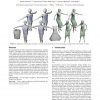
Moving garments and other cloth objects exhibit dynamic, complex wrinkles. Generating such wrinkles in a virtual environment currently requires either a time-consuming manual desi...
174
click to vote
CVPR
2001
IEEE
16 years 8 months ago
2001
IEEE
This paper describes an imagingsystem that has been designed specifically for the purpose of recovering egomotion and structure from video. The system consists of six cameras in a...
169
click to vote
UIALL
2004
Springer
15 years 11 months ago
2004
Springer
Abstract. Recent trends in software development directed toward intelligence, distribution, and mobility need to be followed by an increased sophistication in user interface design...
170
click to vote
ICALT
2010
IEEE
15 years 4 months ago
2010
IEEE
We propose in this paper a new method to compute indicators based on models transformations. We use the concept of modeled trace and trace-based system to design an indicator. We u...