1142 search results - page 157 / 229 » Is the Brain a Quantum Computer |
158
click to vote
ISCAS
2006
IEEE
16 years 1 days ago
2006
IEEE
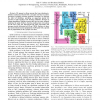
Abstract—We present a silicon neuron that uses shunting inhibition (conductance-based) with a synaptic rise-time to achieve synchrony. Synaptic rise-time promotes synchrony by de...
158
click to vote
WSCG
2004
15 years 7 months ago
2004

Motor imagery electroencephalography (EEG), which embodies cortical potentials during mental simulation of left or right finger lifting tasks, can be used as neural input signals ...
158
click to vote
NIPS
1997
15 years 7 months ago
1997
A Lyapunov function for excitatory-inhibitory networks is constructed. The construction assumes symmetric interactions within excitatory and inhibitory populations of neurons, and...
193
click to vote
CCGRID
2011
IEEE
14 years 9 months ago
2011
IEEE
– Efficient implementations of the Discrete Fourier Transform (DFT) for GPUs provide good performance with large data sizes, but are not competitive with CPU code for small data ...
159
click to vote
IPPS
2003
IEEE
15 years 11 months ago
2003
IEEE
The accurate modeling of the electronic structure of atoms and molecules involves computationally intensive tensor contractions involving large multi-dimensional arrays. The effi...