847 search results - page 34 / 170 » Learning Action Selection Network of Intelligent Agent |
151
click to vote
ICML
2003
IEEE
16 years 7 months ago
2003
IEEE
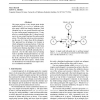
The paper explores a very simple agent design method called Q-decomposition, wherein a complex agent is built from simpler subagents. Each subagent has its own reward function and...
160
click to vote
AAAI
2000
15 years 7 months ago
2000

We consider the use of multi-agent systems to control network routing. Conventional approaches to this task are based on Ideal Shortest Path routing Algorithm (ISPA), under which ...
132
click to vote
AIPS
1996
15 years 7 months ago
1996
The principle of least commitment was embraced early in planning research. Hierarchical task networks (HTNs)reason about high-level tasks without committing to specific low-level ...
185
click to vote
ATAL
2008
Springer
15 years 8 months ago
2008
Springer
Humans continuously assess one another's situational context, modify their own affective state, and then respond based on these outcomes through empathetic expression. Virtua...
167
click to vote
ATAL
2005
Springer
15 years 11 months ago
2005
Springer
Many multi-agent systems consist of a complex network of autonomous yet interdependent agents. Examples of such networked multi-agent systems include supply chains and sensor netw...