11428 search results - page 111 / 2286 » Learning From Crowds |
149
Voted
EMNLP
2008
15 years 5 months ago
2008
We present a discriminative method for learning selectional preferences from unlabeled text. Positive examples are taken from observed predicate-argument pairs, while negatives ar...
127
Voted
NIPS
1998
15 years 5 months ago
1998
Dyadic data refers to a domain with two nite sets of objects in which observations are made for dyads, i.e., pairs with one element from either set. This type of data arises natur...
163
Voted
CVPR
2009
IEEE
16 years 11 months ago
2009
IEEE
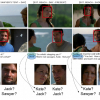
In many image and video collections, we have access
only to partially labeled data. For example, personal photo
collections often contain several faces per image and a caption
t...
147
click to vote
ICIP
2008
IEEE
16 years 5 months ago
2008
IEEE

Summarizing the contents of a video containing human activities is an important problem in computer vision and has important applications in automated surveillance systems. Summar...
125
Voted
ALT
2006
Springer
16 years 21 days ago
2006
Springer
A model for learning in the limit is defined where a (so-called iterative) learner gets all positive examples from the target language, tests every new conjecture with a teacher ...