288 search results - page 3 / 58 » Learning to Play Chess Using Temporal Differences |
197
click to vote
CEC
2010
IEEE
15 years 6 months ago
2010
IEEE

—In this paper we apply Coevolutionary Temporal Difference Learning (CTDL), a hybrid of coevolutionary search and reinforcement learning proposed in our former study, to evolve s...
196
Voted
CIG
2006
IEEE
16 years 21 days ago
2006
IEEE
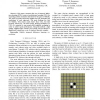
Abstract— This paper compares the use of temporal difference learning (TDL) versus co-evolutionary learning (CEL) for acquiring position evaluation functions for the game of Othe...
144
click to vote
ICML
2006
IEEE
16 years 7 months ago
2006
IEEE
We introduce relational temporal difference learning as an effective approach to solving multi-agent Markov decision problems with large state spaces. Our algorithm uses temporal ...
145
click to vote
CIG
2005
IEEE
16 years 8 days ago
2005
IEEE
Previous research on the use of coevolution to improve a baseline chess program demonstrated a performance rating of 2550 against Pocket Fritz 2.0 (PF2). A series of 12 games (6 wh...
158
click to vote
CG
2006
Springer
15 years 10 months ago
2006
Springer
While recently the strength of chess-playing programs has grown immensely, their capability of explaining in human understandable terms why some moves are good or bad has enjoyed l...