1365 search results - page 188 / 273 » Maximal Causality Analysis |
186
click to vote
TMC
2010
15 years 15 days ago
2010

Cooperation between wireless nodes to retransmit data for the other users introduces multiuser diversity to a wireless network and increases the system throughput. In this paper, t...
269
Voted
Lecture Notes
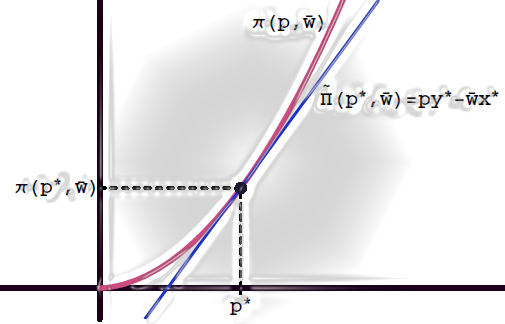
The main objective of the course is for students to be able to analyze problems in microeconomic theory at the beginning graduate level. Students successfully completing the course...
148
click to vote
CVPR
2003
IEEE
16 years 7 months ago
2003
IEEE
In this paper, we develop a general classification framework called Kullback-Leibler Boosting, or KLBoosting. KLBoosting has following properties. First, classification is based o...
199
Voted
CVPR
2007
IEEE
16 years 7 months ago
2007
IEEE
We present a hierarchical generative model for object recognition that is constructed by weakly-supervised learning. A key component is a novel, adaptive patch feature whose width...
163
click to vote
ICCV
2003
IEEE
16 years 7 months ago
2003
IEEE
The objective of active recognition is to iteratively collect the next "best" measurements (e.g., camera angles or viewpoints), to maximally reduce ambiguities in recogn...