393 search results - page 27 / 79 » On the sustained tracking of human motion |
ICPR
2008
IEEE
16 years 1 months ago
2008
IEEE
We propose a 2D model-based approach for tracking human body parts during articulated motion. A human is modeled as a stick figure with thirteen landmarks, and an action is a sequ...
138
click to vote
ICAPR
2005
Springer
15 years 5 months ago
2005
Springer
In this paper we present a technique for predicting the 2D human body joints and limbs position in monocular image sequences, and reconstructing its corresponding 3D postures using...
100
click to vote
ICCV
2001
IEEE
16 years 1 months ago
2001
IEEE
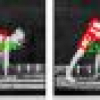
Tree-structured probabilistic models admit simple, fast inference. However, they are not well suited to phenomena such as occlusion, where multiple components of an object may dis...
131
click to vote
IJRR
2011
14 years 6 months ago
2011

Abstract People typically move and act under the constraints of an environment, making human behavior strongly place-dependent. Motion patterns, the places and the rates at which p...
ICPR
2002
IEEE
16 years 27 days ago
2002
IEEE

Humans are articulated objects composed of non-rigid parts. We are interested in detecting and tracking human motions over various periods of time. In this paper we describe a met...