2168 search results - page 108 / 434 » Randomized Algorithms and Complexity Theory |
173
Voted
WISEC
2009
ACM
16 years 1 months ago
2009
ACM
Time synchronization in highly distributed wireless systems like sensor and ad hoc networks is extremely important in order to maintain a consistent notion of time throughout the ...
187
click to vote
CCS
2011
ACM
14 years 6 months ago
2011
ACM
We present the design, implementation and evaluation of an algorithm that checks audit logs for compliance with privacy and security policies. The algorithm, which we name reduce,...
173
click to vote
CORR
2011
Springer
15 years 1 months ago
2011
Springer

In this paper, we study the average case complexity of the Unique Games problem. We propose a natural semi-random model, in which a unique game instance is generated in several st...
173
Voted
ATAL
2008
Springer
15 years 8 months ago
2008
Springer
Many multiagent domains where cooperation among agents is crucial to achieving a common goal can be modeled as coalitional games. However, in many of these domains, agents are une...
220
click to vote
CVPR
2009
IEEE
17 years 1 months ago
2009
IEEE
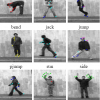
We present a new method for classification with structured
latent variables. Our model is formulated using the
max-margin formalism in the discriminative learning literature.
We...