2168 search results - page 268 / 434 » Randomized Algorithms and Complexity Theory |
207
click to vote
GECCO
2004
Springer
16 years 25 days ago
2004
Springer

Abstract. In this paper we address the problem of finding gene regulatory networks from experimental DNA microarray data. Different approaches to infer the dependencies of gene r...
198
click to vote
SIGECOM
2006
ACM
16 years 1 months ago
2006
ACM
In traditional game theory, players are typically endowed with exogenously given knowledge of the structure of the game—either full omniscient knowledge or partial but fixed in...
230
Voted
CVPR
2004
IEEE
16 years 9 months ago
2004
IEEE
Markov random field models provide a robust and unified framework for early vision problems such as stereo, optical flow and image restoration. Inference algorithms based on graph...
243
click to vote
CVPR
2007
IEEE
16 years 9 months ago
2007
IEEE
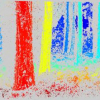
A simple stereo matching algorithm is proposed that visits only a small fraction of disparity space in order to find a semi-dense disparity map. It works by growing from a small s...
169
click to vote
RECOMB
2004
Springer
16 years 7 months ago
2004
Springer
In order to apply gene-order rearrangement algorithms to the comparison of genome sequences, Pevzner and Tesler [9] bypass gene finding and ortholog identification, and use the or...