848 search results - page 114 / 170 » Randomness and the linear degrees of computability |
175
click to vote
CHI
2011
ACM
14 years 9 months ago
2011
ACM

We introduce dynamic physical properties as an additional degree of freedom for passive tabletop controls. Using electromagnetic actuation, we manipulate attributes of tangibles o...
168
click to vote
ESA
2004
Springer
15 years 11 months ago
2004
Springer

Edge contraction is shown to be a useful mechanism to improve lower bound heuristics for treewidth. A successful lower bound for treewidth is the degeneracy: the maximum over all ...
179
click to vote
VIS
2005
IEEE
16 years 7 months ago
2005
IEEE
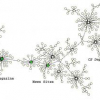
We study the problem of visualizing large networks and develop es for effectively abstracting a network and reducing the size to a level that can be clearly viewed. Our size reduc...
131
click to vote
MICCAI
2007
Springer
16 years 7 months ago
2007
Springer
In this paper, we propose a unified framework for computing atlases from manually labeled data at various degrees of "sharpness" and the joint registration-segmentation o...
259
click to vote
P2P
2009
IEEE
16 years 1 months ago
2009
IEEE
—Characterizing user churn has become an important topic in studying P2P networks, both in theoretical analysis and system design. Recent work [26] has shown that direct sampling...