346 search results - page 45 / 70 » Security Arguments for Digital Signatures and Blind Signatur... |
124
click to vote
ACISP
2010
Springer
14 years 12 months ago
2010
Springer
Many applications using cryptographic hash functions do not require collision resistance, but some kind of preimage resistance. That's also the reason why the widely used SHA-...
129
click to vote
CCS
2001
ACM
15 years 6 months ago
2001
ACM
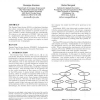
The Domain Name System (DNS) is a distributed database that allows convenient storing and retrieving of resource records. DNS has been extended to provide security services (DNSSE...
118
Voted
JSW
2007
15 years 1 months ago
2007

— Web Services offer great promise for integrating and automating software applications within and between enterprises over the Internet. However, ensuring that Web Services can ...
ICDCSW
2007
IEEE
15 years 8 months ago
2007
IEEE
Recent secure code-update protocols for sensor networks have been based on asymmetric-crypto primitives such as digital signatures. Our approach, Castor, explores the feasibility ...
148
Voted
JOC
2007
15 years 1 months ago
2007
Signcryption is a public key or asymmetric cryptographic method that provides simultaneously both message confidentiality and unforgeability at a lower computational and communica...