303 search results - page 37 / 61 » Using Lexical Similarity in Handwritten Word Recognition |
177
click to vote
LREC
2008
15 years 7 months ago
2008

Word Sense Disambiguation (WSD) is an intermediate task that serves as a means to an end defined by the application in which it is to be used. However, different applications have...
178
click to vote
ICCV
2001
IEEE
16 years 8 months ago
2001
IEEE
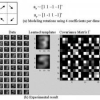
By representing images and image prototypes by linear subspaces spanned by "tangent vectors" (derivatives of an image with respect to translation, rotation, etc.), impre...
175
click to vote
SDM
2010
SIAM
15 years 7 months ago
2010
SIAM
We describe a novel semi-supervised method called WordCodebook Learning (WCL), and apply it to the task of bionamed entity recognition (bioNER). Typical bioNER systems can be seen...
143
click to vote
EMNLP
2007
15 years 7 months ago
2007
It has been widely observed that different NLP applications require different sense granularities in order to best exploit word sense distinctions, and that for many applications ...
154
Voted
ICDAR
2009
IEEE
16 years 1 months ago
2009
IEEE
In this paper, we present a multi-level recognizer for online Arabic handwriting. In Arabic script (handwritten and printed), cursive writing – is not a style – it is an inher...