466 search results - page 20 / 94 » Using Orientation Information for Qualitative Spatial Reason... |
229
click to vote
APVIS
2011
2011
Loose capacity-constrained representatives for the qualitative visual analysis in molecular dynamics
14 years 7 months ago
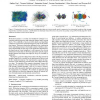
Molecular dynamics is a widely used simulation technique to investigate material properties and structural changes under external forces. The availability of more powerful cluster...
157
click to vote
FLAIRS
2006
15 years 8 months ago
2006

This paper outlines a symbolic computational theory for recognizing variable spatial environments-The Theory of Cognitive Prism, (Dong 2005). This theory defines distance and orie...
193
click to vote
AIIA
1995
Springer
15 years 11 months ago
1995
Springer
In this paper we describe a framework for reasoning about temporal explanation problems, which is based on our previous work on model-based diagnosis of dynamic systems. We use an ...
201
click to vote
MOBISYS
2005
ACM
16 years 7 months ago
2005
ACM
If a mobile computing device knows how it is positioned and oriented in relation to other devices nearby, then it can provide enhanced support for multi-device and multi-user inte...
187
click to vote
ARTMED
2006
15 years 7 months ago
2006
Objective: The objective of this paper is to demonstrate how a formal spatial theory can be used as an important tool for disambiguating the spatial information embodied in biomed...