273
click to vote
ICDAR
2011
IEEE
14 years 4 months ago
2011
IEEE
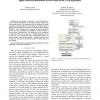
—In this paper, we present a novel approach for super-resolved binarization of document images acquired by low quality devices. The algorithm tries to compute the super resolutio...
148
click to vote
ICDAR
2011
IEEE
14 years 4 months ago
2011
IEEE

Abstract—The grapheme codebook is a high-performing technique for offline writer identification. This paper considers whether the de facto standards for initial grapheme extrac...
181
click to vote
ICDAR
2011
IEEE
14 years 4 months ago
2011
IEEE
—Handwritten text line segmentation on real-world data presents significant challenges that cannot be overcome by any single technique. Given the diversity of approaches and the...
139
click to vote
ICDAR
2011
IEEE
14 years 4 months ago
2011
IEEE
—Table detection is always an important task of document analysis and recognition. In this paper, we propose a novel and effective table detection method via visual separators an...
151
click to vote
ICDAR
2011
IEEE
14 years 4 months ago
2011
IEEE
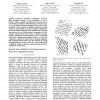
—Questioned Document Examination processes often encompass analysis of torn documents. To aid a forensic expert, automatic classification of content type in torn documents might ...
185
click to vote
ICDAR
2011
IEEE
14 years 4 months ago
2011
IEEE
—To cope with the tremendous variations of writing styles encountered between different individuals, unconstrained automatic handwriting recognition systems need to be trained on...
151
click to vote
ICDAR
2011
IEEE
14 years 4 months ago
2011
IEEE
—We propose a new method for an effective removal of the printing artifacts occurring in historical newspapers which are caused by problems in the hot metal typesetting, a widely...
164
click to vote
ICDAR
2011
IEEE
14 years 4 months ago
2011
IEEE
—The italic detection and slant rectification is a key step of optical character recognition (OCR). In this paper, a novel method is proposed to detect and rectify italic charact...
122
click to vote
ICDAR
2011
IEEE
14 years 4 months ago
2011
IEEE
—Recognition of document images having Greek polytonic (multi accent) characters is a challenging task due the large number of existing character classes (more than 270). In this...
168
click to vote
ICDAR
2011
IEEE
14 years 4 months ago
2011
IEEE
Word searching and indexing in historical document collections is a challenging problem because, characters in these documents are often touching or broken due to degradation/agei...