139
click to vote
VIS
2007
IEEE
16 years 5 months ago
2007
IEEE
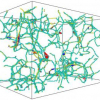
Analysis of materials obtained from physical simulations is important in the physical sciences. Our research was motivated by the need to investigate the properties of a simulated...
132
click to vote
VIS
2007
IEEE
16 years 5 months ago
2007
IEEE
Topology has been an important tool for analyzing scalar data and flow fields in visualization. In this work, we analyze the topology of multivariate image and volume data sets wit...
132
click to vote
VIS
2007
IEEE
16 years 5 months ago
2007
IEEE

Our ability to generate ever-larger, increasingly-complex data, has established the need for scalable methods that identify, and provide insight into, important variable trends and...
144
click to vote
VIS
2007
IEEE
16 years 5 months ago
2007
IEEE
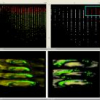
Perfusion data are dynamic medical image data which characterize the regional blood flow in human tissue. These data bear a great potential in medical diagnosis, since diseases can...
127
click to vote
VIS
2007
IEEE
16 years 5 months ago
2007
IEEE
Modern unsteady (multi-)field visualizations require an effective reduction of the data to be displayed. From a huge amount of information the most informative parts have to be ext...
167
click to vote
VIS
2007
IEEE
16 years 5 months ago
2007
IEEE
Pipeline architectures provide a versatile and efficient mechanism for constructing visualizations, and they have been implemented in numerous libraries and applications over the p...
137
click to vote
VIS
2007
IEEE
16 years 5 months ago
2007
IEEE
Abstract-- Multi-projector displays today are automatically registered, both geometrically and photometrically, using cameras. Existing registration techniques assume pre-calibrate...
134
click to vote
VIS
2007
IEEE
16 years 5 months ago
2007
IEEE

We present a general framework for the modeling and optimization of scalable multi-projector displays. Based on this framework, we derive algorithms that can robustly optimize the ...
128
click to vote
VIS
2007
IEEE
16 years 5 months ago
2007
IEEE
Volumetric data commonly has high depth complexity which makes it difficult to judge spatial relationships accurately. There are many different ways to enhance depth perception, su...
135
click to vote
VIS
2007
IEEE
16 years 5 months ago
2007
IEEE
Direct volume rendering techniques map volumetric attributes (e.g., density, gradient magnitude, etc.) to visual styles. Commonly this mapping is specified by a transfer function. ...