269
click to vote
CVPR
2009
IEEE
17 years 2 months ago
2009
IEEE
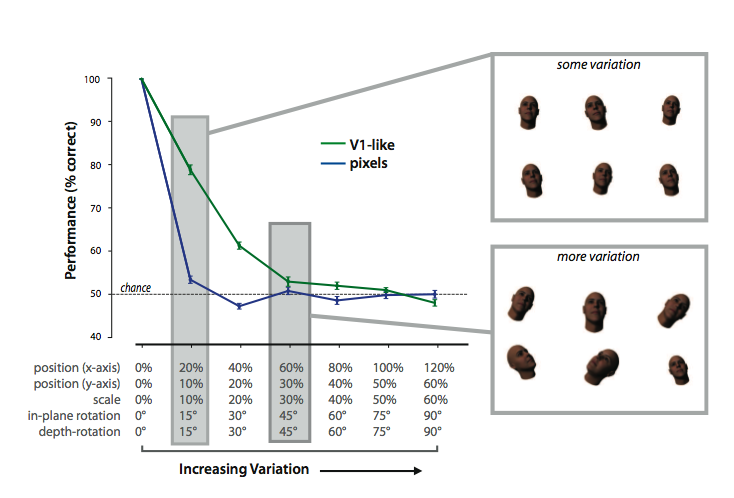
In recent years, large databases of natural images have
become increasingly popular in the evaluation of face and
object recognition algorithms. However, Pinto et al. previously
...
241
click to vote
CVPR
2009
IEEE
17 years 2 months ago
2009
IEEE
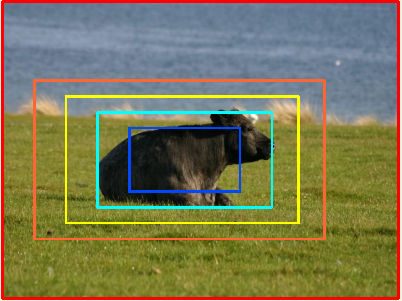
This paper discusses the question: Can we improve the recognition of objects by using their spatial context? We start from Bag-of-Words models and use the Pascal 2007 dataset. We u...
320
click to vote
CVPR
2009
IEEE
17 years 2 months ago
2009
IEEE

We generalize reflection symmetry detection to a curved
glide-reflection symmetry detection problem. We propose
a unifying, local feature-based approach for curved glidereflectio...
264
click to vote
CVPR
2009
IEEE
17 years 2 months ago
2009
IEEE
Global shape information is an effective top-down complement
to bottom-up figure-ground segmentation as well
as a useful constraint to avoid drift during adaptive tracking.
We p...
341
click to vote
CVPR
2009
IEEE
17 years 2 months ago
2009
IEEE
A Bayesian marked point process (MPP) model is developed
to detect and count people in crowded scenes. The
model couples a spatial stochastic process governing number
and placem...