3884 search results - page 102 / 777 » A simplified modeling approach for human system interaction |
111
click to vote
ICCV
2009
IEEE
14 years 11 months ago
2009
IEEE
For many applications in graphics, design, and human computer interaction, it is essential to understand where humans look in a scene. Where eye tracking devices are not a viable ...
137
click to vote
CVPR
2011
IEEE
14 years 9 months ago
2011
IEEE

We present a human-centric paradigm for scene understanding. Our approach goes beyond estimating 3D scene geometry and predicts the “workspace” of a human which is represented...
158
click to vote
SIGCSE
2002
ACM
15 years 1 months ago
2002
ACM

Empirical evidence shows the ability for computer technology to deliver on its promises of enhancing our quality of life relies on how well the application fits our understanding ...
153
click to vote
CVPR
2009
IEEE
16 years 8 months ago
2009
IEEE
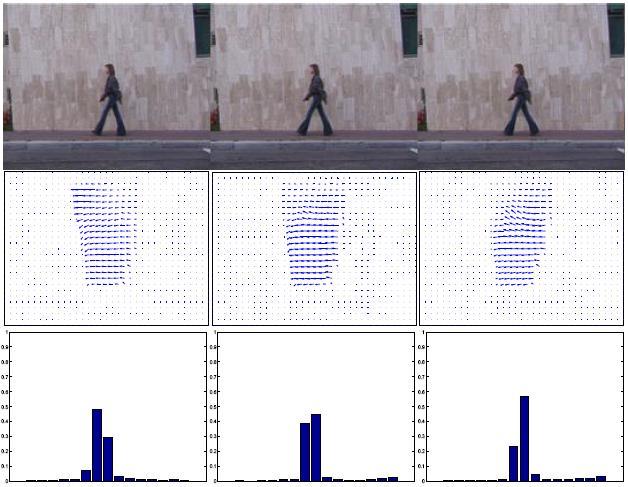
System theoretic approaches to action recognition model the dynamics of a scene with linear dynamical systems (LDSs) and perform classification using metrics on the space of LDSs, ...
103
click to vote
DAGSTUHL
2006
15 years 3 months ago
2006
Previous works define the notion of system model, which provides a formal basis for the definition of the semantics of a distributed object-oriented modelling language. This articl...