5153 search results - page 192 / 1031 » Introduction to Randomized Algorithms |
185
click to vote
ICML
2001
IEEE
16 years 7 months ago
2001
IEEE
We present conditional random fields, a framework for building probabilistic models to segment and label sequence data. Conditional random fields offer several advantages over hid...
148
click to vote
CIE
2009
Springer
16 years 22 days ago
2009
Springer

Abstract. We prove various results on effective numberings and Friedberg numberings of families related to algorithmic randomness. The family of all Martin-L¨of random left-compu...
175
Voted
AINA
2007
IEEE
16 years 15 days ago
2007
IEEE
The random oracle model is an idealized theoretical model that has been successfully used for designing many cryptographic algorithms and protocols. Unfortunately, a series of res...
161
click to vote
DAC
1996
ACM
15 years 10 months ago
1996
ACM
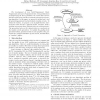
The development of new Field-Programmed, MaskProgrammed and Laser-Programmed Gate Array architectures is hampered by the lack of realistic test circuits that exercise both the arc...
199
click to vote
FGR
2004
IEEE
15 years 10 months ago
2004
IEEE
LDA is a popular subspace based face recognition approach. However, it often suffers from the small sample size problem. When dealing with the high dimensional face data, the LDA ...