4196 search results - page 90 / 840 » Unsupervised Learning of Relations |
141
click to vote
ICDAR
2009
IEEE
15 years 9 months ago
2009
IEEE

The problem of determining the appropriate number of components is important in finite mixture modeling for pattern classification. This paper considers the application of an unsu...
109
click to vote
ACL
2007
15 years 4 months ago
2007
Unsupervised learning of linguistic structure is a difficult problem. A common approach is to define a generative model and maximize the probability of the hidden structure give...
155
click to vote
NIPS
2003
15 years 4 months ago
2003
We describe a pattern acquisition algorithm that learns, in an unsupervised fashion, a streamlined representation of linguistic structures from a plain natural-language corpus. Th...
126
click to vote
TNN
2008
15 years 3 months ago
2008
In this paper, we present a novel network to separate mixtures of inputs that have been previously learned. A significant capability of the network is that it segments the componen...
191
click to vote
CVPR
2009
IEEE
16 years 9 months ago
2009
IEEE
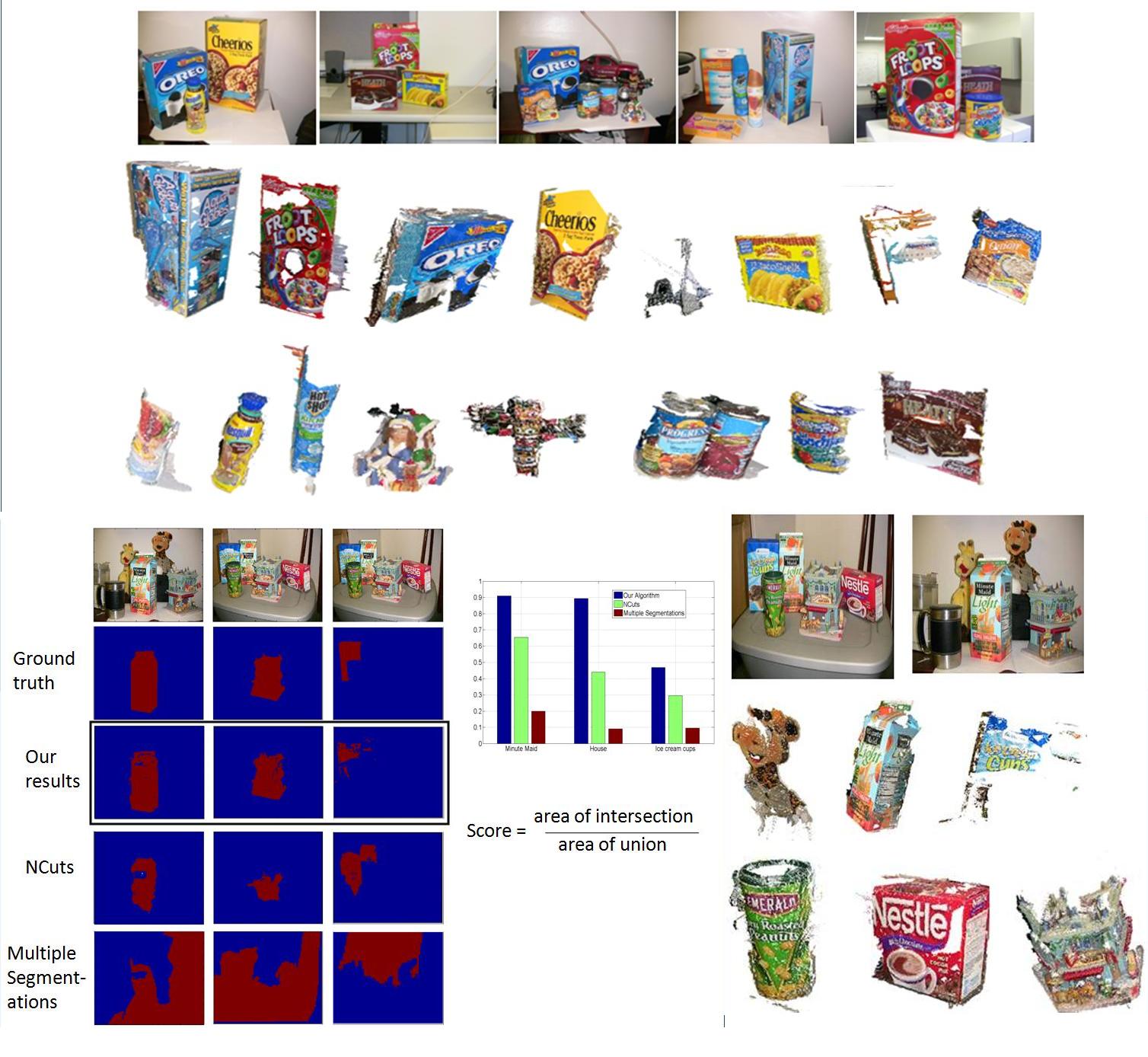
Autonomous systems which learn and utilize a limited
visual vocabulary have wide spread applications.
Enabling such systems to segment a set of cluttered scenes
into objects is ...